You’ve Got (No) Mail: AOL Ends Dial-Up - A Milestone in the Internet’s Story
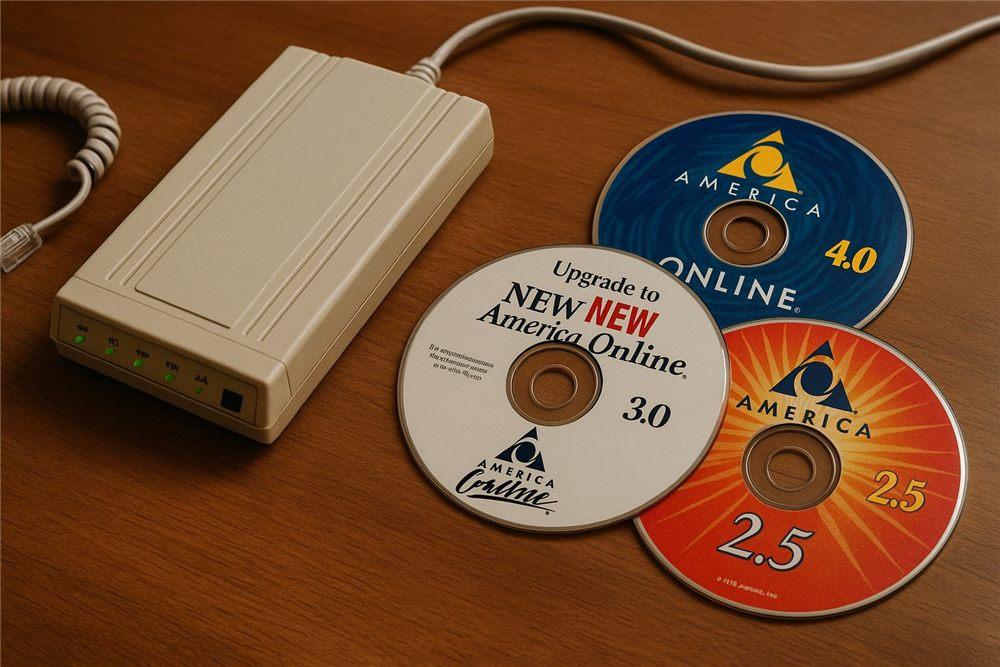
Another page turns in the history of the web: AOL has confirmed it will switch off its US dial-up internet service on 30 September 2025.
From screeches to speeds: saying goodbye to a sound that defined the early web.
Another page turns in the history of the web: AOL has confirmed it will switch off its dial-up internet service in the US on 30 September 2025.
For many, AOL’s familiar discs and the modem’s hiss-ping-screech were the gateway to an online world that felt brand new, a little wild, and endlessly exciting.
AOL’s dial-up shutdown in the US is more than a technical footnote — it’s the closing chapter of the consumer internet’s first era.
Why this matters
Dial-up wasn’t just a way to connect; it defined early internet culture. Limited bandwidth shaped how websites were designed, how we communicated (hello, instant messaging), and how businesses first showed up online.
The end of AOL’s service marks a clear line between the web’s analog roots and today’s always-on, mobile-first, fibre-powered reality.
A quick timeline of a cultural icon
- Early–mid 1990s: AOL popularises home internet access with those ubiquitous trial CDs, chat rooms, and “You’ve got mail.”
- 1996–2001: Explosive growth; AOL becomes the biggest name in consumer internet access.
- 2000s: Broadband spreads; dial-up begins a long decline — but never fully disappears.
- 2010s–2020s: Dial-up lingers for a shrinking group of users in rural areas and for niche needs.
- 30 September 2025: AOL pulls the plug on dial-up, ending a 30+ year run.
From dial-up constraints to modern possibilities
The dial-up era forced designers to obsess over page weight, image compression, and progressive enhancement.
Today, with widespread fibre and 5G, we can deliver richer experiences — but the best modern sites still carry forward those early lessons:
- Performance is a feature: Fast sites convert better and rank higher.
- Accessibility is non-negotiable: Clean, semantic HTML and usable design help every visitor.
- Resilience matters: Great sites degrade gracefully on slower connections or older devices.
The UK angle
In the UK, major providers wound down dial-up years ago (BT switched off its service back in 2013), but AOL’s global decision is a symbolic bookend.
It highlights how far infrastructure and digital expectations have come — and how essential reliable, secure, and accessible web experiences are for every business.
What this milestone signals for businesses
- Modern expectations are universal: Visitors expect instant load times, responsive layouts, and strong privacy practices.
- Content and UX win: Clear messaging, accessible navigation, and purposeful design matter more than ever.
- Keep iterating: The web evolves fast — treat your site as a living product, not a one-off project.
Where we go next
The end of AOL’s dial-up is a nostalgic moment — and a useful reminder. The internet has always been about connection, discovery, and opportunity.
As we look ahead to AI-assisted experiences, edge-rendered sites, and ever-faster networks, it’s the early web’s scrappy spirit — make it work, make it useful, make it for everyone — that’s worth carrying forward.
Bringing your website into the future
At O’Brien Media we help UK businesses modernise their web presence — faster, more accessible, and easier to manage.
If this milestone has you thinking it’s time for an upgrade, we’d love to help.