
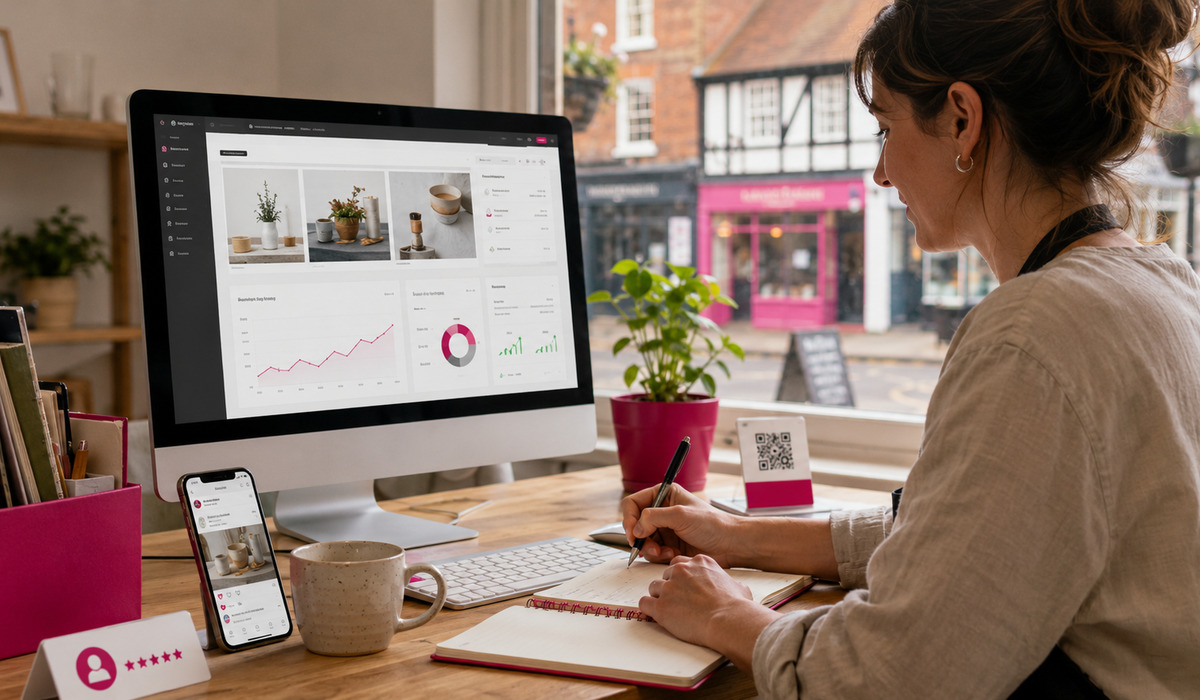
How to promote your small business online in 2026 without spending a fortune
Promoting a small business online can feel like a choice between spending money you do not have or spending every spare hour trying to keep up with social media.
Thankfully, it does not have to be either.
Some of the most useful ways to promote a small business cost nothing beyond your time. Others need a modest budget but can work well when they are aimed at the right people and measured properly. The trick is knowing which activities are likely to move the business forward and which ones simply create more noise.
There is no single marketing channel that works for every business, so this is not a list of things you must do. Think of it as a collection of practical options, beginning and ending with things you can try for free.
Start with the free opportunities already available to you
Before spending anything on adverts, make sure customers can find accurate and convincing information about your business. Paying to send more people towards an incomplete profile or an unclear website is rarely money well spent.
Claim and improve your Google Business Profile
For a business serving a particular town or area, a free Google Business Profile is one of the best places to begin. It controls much of the information people see about you in Google Search and Maps, including your opening hours, phone number, photographs, reviews and website address.
Google says that complete and accurate profiles are more likely to appear in relevant local searches. Keeping your hours up to date, choosing the correct business category, adding genuine photographs and responding to reviews can also help customers feel more confident about contacting you.
You do not need to post something every day or cram keywords into the business name. In fact, adding services or locations to your name when they are not part of the real business name can put the profile at risk. Concentrate on accurate information and useful updates instead.
Read Google’s advice on improving local visibility.
Ask genuine customers for reviews
A steady flow of honest reviews can be far more persuasive than a polished advert. Ask shortly after completing a job or making a sale, while the experience is still fresh, and make the process easy by supplying a direct review link or QR code.
Do not offer rewards only for positive reviews, buy reviews or ask friends to pretend they are customers. Aside from undermining trust, fake reviews and concealed incentivised reviews have been banned practices under UK consumer law since April 2025.
It is also worth replying to reviews. A short, personal response shows prospective customers that somebody is paying attention. If a review is critical, a calm and helpful answer will usually reflect better on the business than an argument.
Improve the pages you already have
Small businesses sometimes assume that SEO means publishing several blog posts a week. Often, there is more value in improving the important pages already on the website.
Look at each main service page and ask whether it clearly explains:
- what you provide;
- who it is intended for;
- which areas you cover;
- what makes your approach different;
- what the customer should do next.
Add answers to questions customers regularly ask. Include photographs of real work where appropriate. Replace vague headings such as “Our Solutions” with wording a customer would understand and might genuinely search for.
Google’s own guidance recommends creating original, helpful content based on what you know, rather than copying or lightly rewording information that already exists elsewhere. A detailed page informed by genuine experience is usually more valuable than ten generic articles written simply to fill a publishing schedule.
Google’s SEO Starter Guide explains the fundamentals.
Turn everyday work into useful content
You do not need to become a full-time content creator. Much of the material you need already exists in your working week.
A question asked by three customers could become a short article. A recently completed project could become a case study. A common mistake could become a quick video. A photograph taken during a job could become a social media update, provided you have permission to share it.
This type of content works because it is specific. It demonstrates what you know and gives potential customers a clearer idea of what it is like to work with you.
What tends not to work is producing generic “five tips” posts that could have come from any business in any industry. The internet is not short of broad advice. Your own experience, examples and opinions are what make the content worth reading.
Choose one or two social platforms rather than trying to be everywhere
A Facebook page, Instagram account, TikTok profile, LinkedIn company page, YouTube channel and Threads account may all be free to open. Keeping all of them useful is a different matter.
Choose platforms according to where your customers are and what you can realistically show them. A tradesperson may get more from local Facebook groups and before-and-after photographs. A business consultant might find LinkedIn more useful. A retailer with visually interesting products could be better suited to Instagram, Pinterest or short video.
The UK Government’s digital marketing guidance makes the same basic point: understand your audience and concentrate on the channels they are likely to use.
Posting regularly can help, but regular does not have to mean daily. One useful update each week is better than seven rushed posts followed by two months of silence.
What works on social media
- Real examples of your work.
- Useful answers to customer questions.
- People and stories from behind the business.
- Short videos that demonstrate something clearly.
- Helpful participation in relevant groups and conversations.
- A clear next step when you want people to enquire, book or buy.
What usually does not work
- Posting the same sales message every day.
- Joining groups purely to drop links to your website.
- Buying followers who will never become customers.
- Using every trending hashtag regardless of relevance.
- Copying another company’s content with only a few words changed.
- Measuring success entirely by likes and follower numbers.
A post with six likes that generates a good enquiry has done more for the business than one with 10,000 views from people who would never buy from you.
Use local online communities properly
Local Facebook groups, neighbourhood platforms and community forums can put a small business in front of people nearby without advertising costs. However, there is a fairly fine line between being visible and becoming the business that everybody mutes.
Read the group rules before posting. Answer relevant questions without forcing a sales pitch into every reply. Recommend other good local businesses when you can. If promotional posts are only permitted on a particular day, respect that.
People remember businesses that are consistently helpful. They also remember those that appear only when there is an opportunity to paste a link.
Build partnerships with complementary businesses
One of the most overlooked forms of online promotion is working with another business that serves a similar audience without competing directly.
An independent wedding photographer might collaborate with venues, florists and caterers. A bookkeeper could work with business advisers or commercial insurance brokers. A web designer might partner with photographers, copywriters and IT support companies.
You could produce a shared guide, interview one another, run an online session or recommend each other when it genuinely suits the customer. It can introduce both businesses to a relevant audience without either side paying an advertising platform.
Keep it useful and selective. Swapping dozens of unrelated links simply to manipulate search rankings is unlikely to help and could create problems. A genuine local partnership, on the other hand, makes sense to customers as well as search engines.
Spend a little where there is a clear reason
Free marketing is not really free once your time is taken into account. There comes a point where a modest amount of paid promotion can be sensible, particularly when you know what you are trying to achieve.
Use tightly targeted search advertising
Search advertising can work well because it reaches people who are already looking for a product or service. It is particularly useful for higher-value services, urgent problems or searches with an obvious buying intention.
It can also spend money remarkably quickly if it is left on broad automatic settings.
Start with a small geographic area and a short list of specific searches. Send visitors to the most relevant page, rather than automatically directing every advert to the homepage. Track calls, forms, bookings or purchases so you know whether the campaign is producing anything useful.
Paying for clicks without measuring enquiries is not marketing; it is hoping.
Promote a social post that has already worked
If a particular post has attracted genuine comments, enquiries or shares, a small amount of paid promotion may extend its reach. This is generally a better starting point than paying to promote something that has already failed to interest your existing audience.
Keep the targeting relevant and the budget controlled. The UK Government’s guidance suggests starting small, testing different messages and avoiding the temptation to use the whole budget before you know what works.
Paid social advertising can be useful for a local event, a specific offer, remarketing or reaching a clearly defined group. Broad “boost this post” campaigns aimed at almost everyone may produce impressive-looking reach figures without bringing in many customers.
Pay to improve the weak part of the journey
Sometimes the best use of a small marketing budget is not buying more visitors. It is fixing what happens after they arrive.
If people visit but do not enquire, the website may need clearer wording, stronger evidence, a simpler form or a better mobile experience. If enquiries arrive but do not convert, the problem may be response time, pricing information or follow-up. If customers buy once and disappear, an email or reminder system might be more valuable than another advertising campaign.
More traffic will not repair a confusing customer journey. It just gives more people the opportunity to leave.
Keep in touch by email, but do it properly
An email list gives you a way to reach people without relying on a social network to show them your post. It can be particularly effective for repeat purchases, seasonal reminders, useful updates and services customers may need again later.
The important part is sending something worth opening. A small, engaged list is better than a huge collection of addresses belonging to people who never asked to hear from you.
Avoid buying email lists. They tend to produce poor results, damage trust and can create legal problems. UK rules differ according to the type of recipient and how their details were collected. For individual subscribers, including sole traders and some partnerships, you will usually need consent or must meet every condition of the soft opt-in. You must also identify your business and provide a straightforward way to unsubscribe.
The Information Commissioner’s Office explains the current email marketing rules.
Measure actions that matter to the business
Before starting a new activity, decide what a worthwhile result would look like. It could be telephone calls, quote requests, bookings, online orders, visits to the shop or people joining an email list.
Then keep a simple record of where enquiries come from. Website analytics can help, but asking “How did you hear about us?” is still useful. Customers do not always follow a neat route. Someone might first notice a van, later read a Google review, follow the business on Facebook and finally visit the website several weeks afterwards.
Do not abandon an idea after three days, but do not keep paying for it indefinitely because it generated lots of impressions. Give each activity a fair test, compare the cost with the quality of the results and adjust it.
Finish with a few more things you can do for free
If you have reached this point without finding room for an advertising budget, there is still plenty you can do.
Update your email signature
Add a useful link beneath your contact details. This could point to a new service, current offer, recent case study or review page. It gives everyday emails a promotional purpose without making them feel like adverts.
Reconnect with previous customers
Past customers already know the business, so keeping in touch can be more productive than trying to reach strangers. Check whether they need an update, replacement, annual service or help with something related to their original purchase.
Make the message personal and useful, and ensure any marketing communication complies with the relevant privacy and electronic marketing rules.
Add your business to worthwhile directories
Look for established trade bodies, local business organisations, council directories and reputable industry platforms. A few accurate listings are more useful than submitting the business to hundreds of low-quality directories.
Keep the name, address, phone number and website details consistent. If a directory looks abandoned, is full of spam or asks for a suspicious reciprocal link, leave it alone.
Publish a proper case study
With the customer’s permission, explain the problem they had, what you did and what changed afterwards. Include specific details and genuine photographs or feedback where possible.
Case studies work because they replace a broad claim such as “we provide excellent service” with evidence of what that service looks like.
Make it easier for other people to recommend you
Tell customers clearly which services you offer, the type of work you are looking for and the area you cover. People may be happy to recommend you but unsure how to describe what you do.
A short page, social post or email that says “These are the problems we can help with” can give customers and business contacts something useful to share.
Check how the business appears on a phone
Search for the business, open its website and try to contact it as if you were a new customer. Is the phone number easy to tap? Does the form work? Are the opening hours correct? Can you tell what the business does within a few seconds?
Google uses the mobile version of a website for indexing and ranking, but this is not only about Google. A frustrating mobile website can lose an enquiry before the customer has even spoken to you.
Consistency generally beats a big short-lived campaign
Small-business marketing does not need to be loud or expensive. It needs to make the business easy to find, easy to understand and easy to trust.
A complete Google Business Profile, a useful website, genuine reviews and a steady stream of real examples will usually provide a stronger foundation than chasing every new platform or paying for adverts without knowing what happens afterwards.
Pick two or three activities you can sustain, decide how you will measure them and give them time to work. Once you know what is producing enquiries or sales, you can put more effort or budget into that rather than spreading both too thinly.
If your website is making online promotion harder than it should be, O’Brien Media can help. We provide website design and development, website support and SEO and local search support from our office in Swindon’s Old Town.
You do not need to arrive with a large budget or a finished marketing plan. Get in touch with O’Brien Media and tell us what you have tried, what has worked and where you would like the business to go next.