
Beauty and Therapy Businesses: How to Choose the Right Web Design Company
For many beauty therapists, salon owners, wellbeing practitioners and complementary therapists, a website is still treated as something that just needs to “exist”. A few treatment prices, some photos, a booking link and that is the job done.
The problem is that your customers do not use your website like that.
They are usually trying to answer simple but important questions. Do you offer the treatment they are looking for? Are you local? Do you seem professional, welcoming and trustworthy? What will the appointment involve? How much does it cost? Is it easy to book?
That is why choosing the right web design company matters, especially if you work in beauty, wellbeing or therapy. A good website should not just look calm and polished. It should help turn real visitors into real bookings and enquiries.
At O’Brien Media, we design WordPress websites for small businesses and service businesses across Swindon, Wiltshire and the UK. If you run a salon, clinic, beauty business or therapy practice and are looking for a new website, or your current site feels out of date, here are some practical things to look for before choosing a web designer.
Start with what your customers are actually searching for
A beauty or therapy business may search for things like “website design for salons”, “website for beauty therapist” or “therapist website design”. Your customers, however, are searching for the service or treatment they need.
That might be:
- “facial treatments near me”
- “massage therapist Swindon”
- “gel nails Old Town Swindon”
- “sports massage Wiltshire”
- “holistic therapist near me”
- “waxing salon in Swindon”
- “reflexology appointment near me”
A good web designer should understand that difference. Your website needs to be designed around your treatments, your location and the questions customers have before booking, not just around what looks good on a screen.
For a beauty or therapy business, that usually means having proper pages for your main treatments, clear pricing where appropriate, information about the areas you cover, practitioner details, customer reviews and strong calls to action that make it easy for people to book or get in touch.
Do not choose a web designer just because they make nice-looking websites
Design matters, but it is only part of the job.
A beauty or therapy website needs to do several things at once. It needs to look professional, load quickly, work well on phones, explain treatments clearly, make customers feel at ease, support local search and make booking or contacting you simple.
If a web design company only talks about colours, layouts and animations, that may be a warning sign. A good website for a salon or therapy practice needs more than a polished homepage.
Ask whether they will help with structure, wording, search engine basics, mobile usability, image preparation, hosting, maintenance and future updates. These are the things that often decide whether a website becomes useful or just sits there quietly doing very little.
Make sure they understand local beauty and wellbeing businesses
Most beauty and therapy businesses rely heavily on local customers. That means your website needs to work well for people searching in your town, nearby villages and surrounding areas.
For example, a therapist based in Swindon may want to be found by people in Old Town, Wroughton, Royal Wootton Bassett, Marlborough, Chippenham, Calne or elsewhere in Wiltshire. A generic website with one short treatments page is unlikely to make the most of that.
Your web designer should be able to talk about local SEO in plain English. They should understand how treatment pages, location signals, page titles, headings, internal links and helpful content all work together.
You do not need to know the technical details yourself, but you should feel confident that the person building your website understands how local customers look for businesses like yours.
Your own photos, space and people build trust
A common problem with beauty and therapy websites is that they rely too heavily on generic stock images. These can make a website look neat, but they rarely help a new customer feel confident about booking.
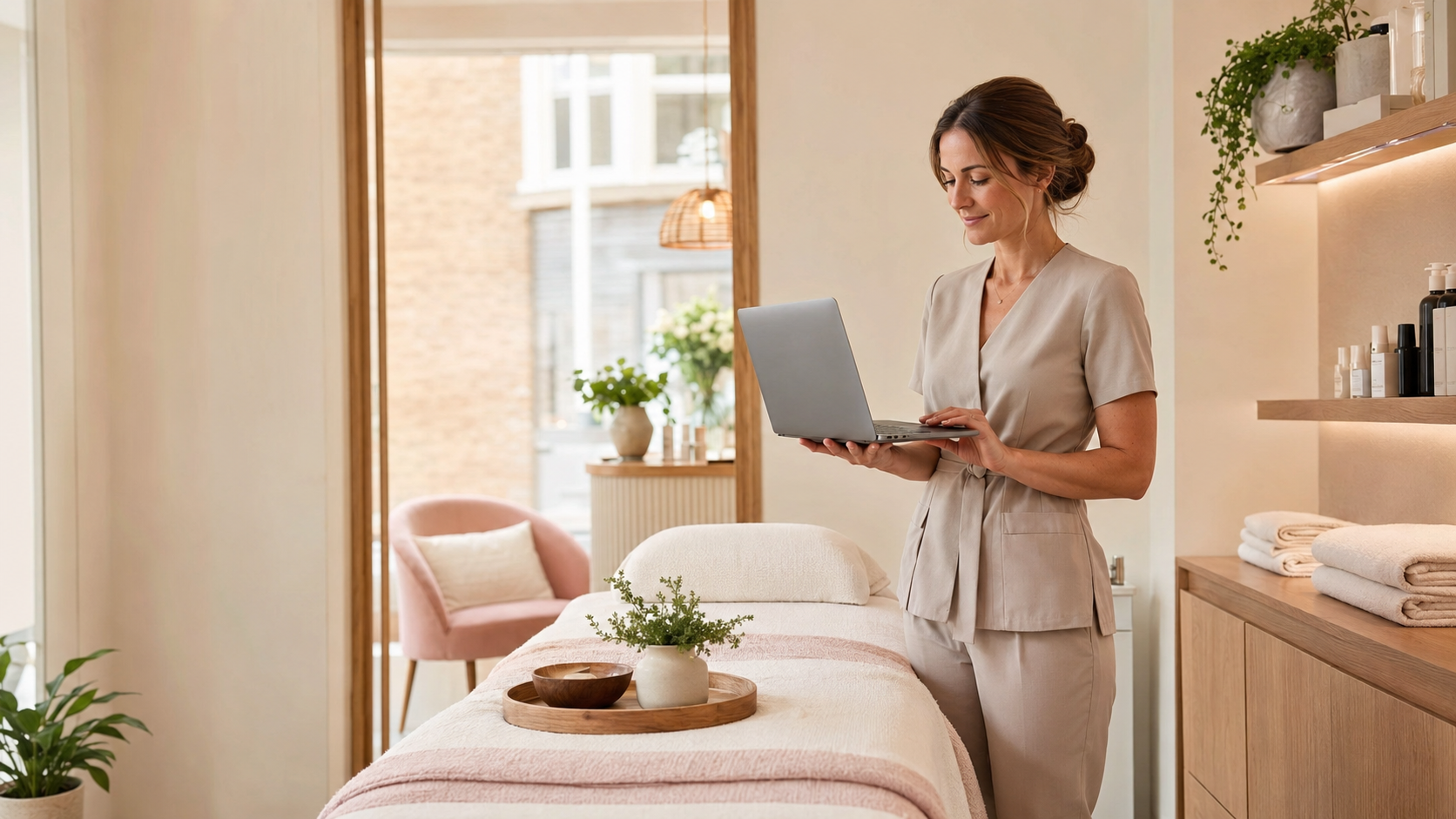
Your own photos are much more useful. Pictures of your treatment room, salon, reception area, products, team, certificates and the small details that make your business feel welcoming can help people know what to expect. Where appropriate and with clear permission, treatment images and before-and-after results can also be valuable.
A good web designer should help you use those images properly. That means choosing the right photos, cropping them well, making sure they load quickly, adding helpful descriptions, and presenting them in a way that feels professional rather than overwhelming.
For beauty and therapy businesses, reassurance matters. Customers often want to feel comfortable with you before they make their first appointment.
Make treatment information clear and easy to find
People should not have to search around your website to work out whether you offer the treatment they need.
Each main treatment should normally have its own clear page, explaining what it is, who it may suit, how long it takes, what customers can expect and how to book. Where there are important suitability, health or consultation considerations, the website should point customers towards the right next step rather than making promises it cannot support.
This is useful for customers and for search engines. It also reduces the number of basic questions you need to answer manually before an appointment.
Look for a website you can update without stress
Your business will change. You may add treatments, change prices, welcome a new team member, introduce a new product range, collect more reviews or run seasonal offers.
That is one of the reasons WordPress is often a strong choice for beauty and therapy businesses. A properly built WordPress website can give you control over your content without locking you into a system that only one company can manage.
When speaking to a web designer, ask whether you will be able to update treatment pages, add offers, publish news or change images yourself. You may still prefer your web designer to do those updates for you, but having the option matters.
A website should support your business as it grows, not become a problem every time something needs changing.
Ask what happens after the website launches
A website is not finished forever on launch day.
WordPress, plugins, themes and hosting environments need ongoing care. Your website may also need small content updates, performance improvements, security checks, new treatment pages, local SEO adjustments and help when your booking system or business changes.
This is especially important for busy therapists and salon owners who do not want to spend their evenings trying to fix website problems.
Before choosing a web design company, ask what support is available after launch. Do they provide hosting? Do they handle updates? Can they make changes for you? Can they help with a booking system? How do you contact them if something goes wrong?
A cheaper website can quickly become expensive if nobody is there to support it properly.
Be careful with very cheap website offers
It is understandable to want to keep costs down, especially as a small business. But very cheap websites often come with compromises.
They may be built from a basic template, have thin treatment information, use poor-quality images, load slowly, lack proper service pages, ignore local SEO, or leave you with no real support once the site is live.
For a beauty or therapy business, that can mean losing bookings from people who were ready to choose a treatment but did not feel confident enough to take the next step.
A good website does not need to be over-complicated, but it does need to be built properly. It should clearly explain what you offer, where you are, why people should feel comfortable booking with you, and how they can take the next step.
Questions beauty and therapy businesses should ask before choosing a web designer
Before you commit to a new website, it is worth asking a few simple questions:
- Can you build a website around my treatments and local area?
- Will the website work well on mobile phones?
- Can you help structure the content so customers understand what I offer?
- Can the website include my booking system or make booking easy?
- Will I be able to show customer reviews, qualifications and treatment information clearly?
- Can you help with basic local SEO for my business?
- Is the website built in WordPress or another platform I can manage in future?
- What support is available after launch?
- Who owns the website, content and domain name?
These questions do not require technical knowledge. They are practical business questions, and a good web designer should be able to answer them clearly.
What a good beauty or therapy website should include
A strong website for a salon, beauty therapist or wellbeing practitioner will usually include a clear homepage, individual treatment pages, prices or guidance on pricing, areas covered, practitioner or team information, photos of your space, customer reviews, contact details, booking or enquiry options, trust signals, and content that helps customers understand what to expect.
It should also make the basics easy. Your phone number should be visible. Your booking link or enquiry form should be simple. Your treatments should be obvious. Your location should be clear. Your website should work properly on a phone.
Many customers will not spend long trying to understand your website. If they cannot quickly see that you offer the treatment they want, in a place that feels right for them, they may move on to another business.
WordPress website design for beauty and therapy businesses
At O’Brien Media, we build WordPress websites for small businesses that need practical, reliable websites without unnecessary fuss.
For beauty, wellbeing and therapy businesses, we focus on making the website clear, professional and welcoming. That means thinking about how customers search, what they need to know before booking, how they compare local businesses, and how the website can support future growth.
We can help with website design, WordPress development, hosting, support, content structure, local SEO basics and ongoing website updates.
If you run a salon, beauty business or therapy practice and are looking for a new website, O’Brien Media can help you create something that works harder for your business.
Get in touch to find out more about how we can help your business.
FAQ: Website design for beauty and therapy businesses
Do beauty and therapy businesses really need a website?
Yes. Social media and word of mouth can be valuable, but many customers will check your website before booking. A professional website helps confirm that your business is active, trustworthy and suitable for the treatment or service they need.
What should a beauty or therapy website include?
It should include your main treatments, clear booking or enquiry options, your location and areas covered, prices or pricing guidance where appropriate, practitioner information, photos, customer reviews and useful details about what customers can expect.
Is WordPress good for salon and therapist websites?
Yes. WordPress is a good choice for many beauty and therapy businesses because it is flexible, widely supported and easy to expand over time. It can support treatment pages, booking links, galleries, blog posts, location pages and enquiry forms.
Can a website help me get more local bookings?
Yes, when it is planned properly. A website with clear treatment pages, local information, useful content and good structure can help more local customers find and contact your business.
How much technical knowledge do I need to manage a beauty or therapy website?
Not much. A well-built WordPress website can be set up so common updates are straightforward. Ongoing support is also useful if you would rather focus on your customers and have your web designer handle changes for you.