
Google’s Latest Spam Update: Why “AI Content” Is Not the Real Issue
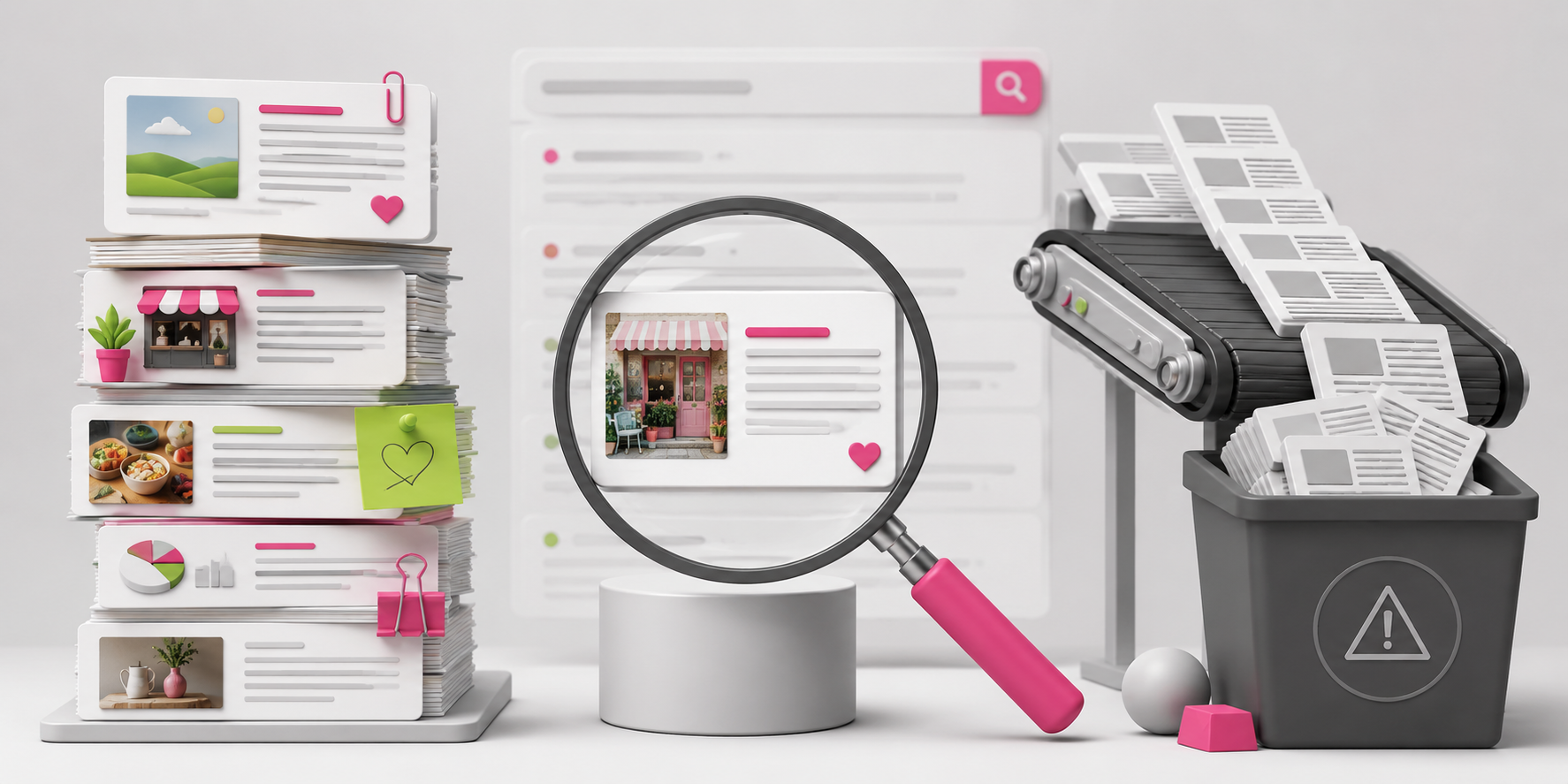
Google has completed its latest spam update, which began rolling out globally on August 18th. Reports across the SEO industry suggest that websites relying on large volumes of automatically generated, search-focused AI content may have been particularly affected.
That does not mean Google is banning AI-written content. It is a useful distinction for small business owners, especially when AI tools are now part of everyday marketing and website work.
The issue is not simply whether AI helped create a page. It is whether that page exists to genuinely help someone, or whether it was produced in bulk purely to catch search traffic.
What Google has confirmed
Google confirmed that its August 2026 spam update applied globally and in all languages, with the rollout completed on 21 August.
Google has not publicly said that this update specifically targeted AI content. However, industry reports have identified ranking drops among some sites that appear to have published large numbers of AI-generated pages, often built around keywords rather than real customer questions.
That aligns closely with Google’s long-standing guidance. Its systems are designed to prioritise useful, reliable content made for people, rather than content created mainly to manipulate search rankings.
AI is a tool, not a shortcut to rankings
There is nothing wrong with using AI to help shape an outline, make sense of a complex subject, improve a first draft or speed up routine work. Used sensibly, it can be genuinely helpful.
The problem starts when content is generated at scale with little real input from the business behind it. Think hundreds of near-identical location pages, vague blog posts built around every possible keyword, or articles that repeat information already available elsewhere without adding anything useful.
Those pages may look complete at first glance, but customers can usually tell when they have not been written by someone who understands the service, the area or the question being asked. Google is getting better at recognising that too.
What this means for your business website
If your website has a small number of well-considered service pages and occasional articles that answer real customer questions, there is no reason to panic. In fact, this type of update should be encouraging. It is intended to reduce the amount of poor-quality content competing for attention in search results.
The strongest content is still the content only your business can provide. That might include your own experience, examples of work you have completed, answers to questions customers ask before they get in touch, local knowledge, clear pricing information or practical advice based on your day-to-day work.
For a local business, a useful page about the work you do in Swindon, Wiltshire or the wider area will always be more valuable than dozens of automated pages written for places you do not really serve.
A quick check worth making
If you have been publishing content with AI assistance, ask a few straightforward questions before it goes live:
- Would this still be useful if someone found it directly, rather than through Google?
- Does it include real insight, experience or information from our business?
- Is it accurate, clear and specific enough to help a potential customer?
- Have we reviewed it properly, rather than publishing it exactly as it was generated?
- Is the purpose to help a person make a decision or solve a problem, rather than simply to rank for a phrase?
If the answer is yes, you are heading in the right direction. Search engine optimisation still matters, but it works best when it helps Google understand genuinely useful content. It should not become the reason the content exists in the first place.
Quality is still the sensible long-term approach
Google’s own advice is clear: SEO can be helpful when it is applied to people-first content. The same applies to AI. It can support good work, but it cannot replace the knowledge, judgement and care that make a website worth visiting.
At O’Brien Media, we help small businesses create and improve website content that makes sense for their customers and is built to last. If you are unsure whether older pages, automated content or a previous SEO approach could be holding your site back, we can take a practical look and help you decide what is worth improving.