
The New Content Failure Mode: When People Love It, but Search Engines Ignore It
For years, digital marketing advice has revolved around a simple goal: create content people love, and search engines will reward you.
But that relationship is changing.
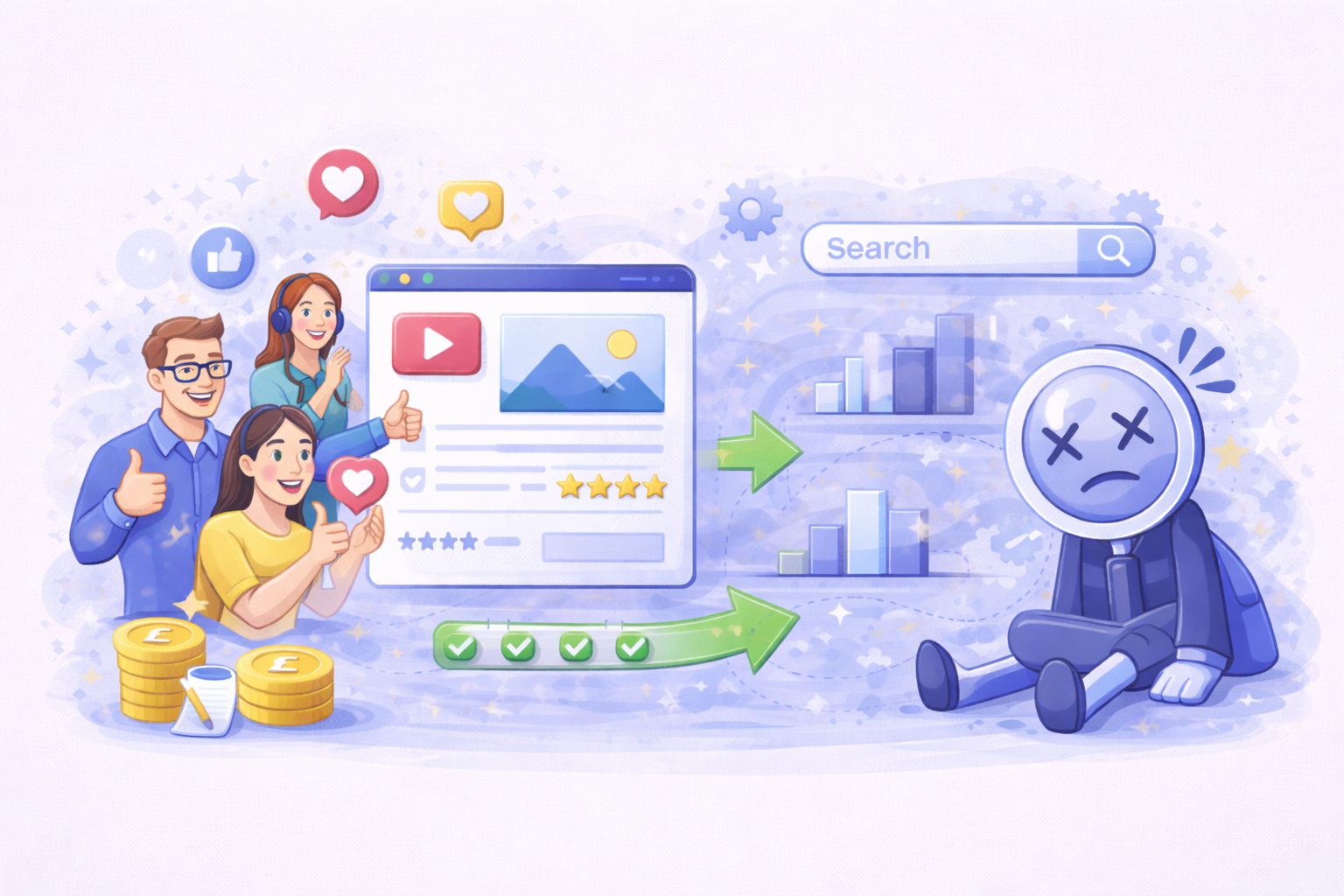
A growing number of businesses are discovering a frustrating new reality — content that resonates strongly with real people can still struggle to gain visibility in search results. Engagement is high, feedback is positive, conversions may even improve… yet organic traffic barely moves.
Welcome to what many are calling the new content failure mode.
What Is the “Content Failure Mode”?
The content failure mode happens when:
- Content performs well with human audiences
- Users engage, read, share, and trust it
- But search engines fail to rank or surface it
This isn’t because the content is poor quality. In fact, it’s often the opposite. The issue lies in how modern search systems — increasingly influenced by machine learning and AI — evaluate content relevance.
Search engines are no longer just matching keywords. They’re modelling expectations.
Why Search Engines May Ignore “Good” Content
Modern search systems rely heavily on pattern recognition. They learn what content is supposed to look like for a given query by analysing millions of existing pages.
If your content doesn’t fit those learned patterns, it can be misunderstood or overlooked — even if it’s genuinely helpful.
Common reasons this happens include:
- Unconventional structure – Content that doesn’t follow familiar layouts
- Unique angles – Original insights that differ from existing top-ranking pages
- Experience-led writing – Real-world advice that doesn’t mirror “SEO-style” explanations
- Audience-first language – Written for customers, not search terms
Ironically, the more original and human your content is, the more likely it may fall outside the model’s expectations.
The Shift from Keywords to Patterns
In the past, SEO largely revolved around keywords, headings, and backlinks. Today, search engines increasingly rely on:
- Content templates learned from top-ranking pages
- Statistical similarity to existing “successful” content
- Predictive models of what an answer should look like
This means that content which breaks the mould — even for good reasons — can struggle to be categorised correctly.
In short: search engines reward familiarity, not creativity.
Why This Is a Growing Problem
As more businesses rely on AI-assisted tools to create content, the web is becoming increasingly uniform. Models are trained on existing content, then used to create more of the same.
That creates a feedback loop:
- Search engines learn from existing pages
- Content creators copy what already ranks
- Search engines reinforce those same patterns
Original thinking becomes harder to surface — not because it’s wrong, but because it’s different.
What This Means for Businesses
If you’re publishing content purely to “tick SEO boxes”, you may still rank — but you risk blending into a sea of sameness.
If you’re publishing content purely for people, you may build trust and authority — but struggle with discoverability.
The challenge now is finding a balance between the two.
How to Avoid the New Content Failure Mode
There’s no single fix, but there are practical ways to reduce the risk.
1. Anchor originality to recognisable structure
You don’t need to copy competitors, but your content should still clearly signal:
- What question it answers
- Who it’s for
- How it fits common search intent
2. Make intent explicit
Search engines respond well when intent is unambiguous. Clear headings, summaries, and context help models understand why your content exists.
3. Combine experience with clarity
First-hand insights are powerful, but they should be framed in a way that aligns with how search engines classify topics.
4. Support strong content with internal linking
Help search engines contextualise your content by linking it to related pages and themes across your site.
5. Measure more than rankings
Some of the most valuable content may never rank first — but can still convert, educate, and build long-term trust.
Why This Matters More Than Ever
As AI-generated summaries and search features evolve, visibility is increasingly shaped by whether content fits learned expectations — not just whether it’s helpful.
That makes it even more important to:
- Understand how search systems interpret content
- Avoid chasing trends blindly
- Focus on sustainable authority, not shortcuts
At O’Brien Media, we see this shift as an opportunity — not a threat.
Businesses that combine genuine expertise with strategic structure will be far better positioned than those producing generic, pattern-matching content at scale.
Final Thoughts
Great content isn’t always enough anymore.
But content that is both genuinely useful and strategically aligned with how search engines learn still wins — and will continue to do so.
If you’re investing in content and not seeing the visibility you expect, it may not be failing your audience. It may simply be misunderstood by the models interpreting it.
And that’s a problem worth fixing properly.